

How to photograph crystals for sale
A practical shot list for color, scale, condition, reflective surfaces, flaws, and a clear first photo that represents the exact piece.
By Regemify · Updated July 23, 2026
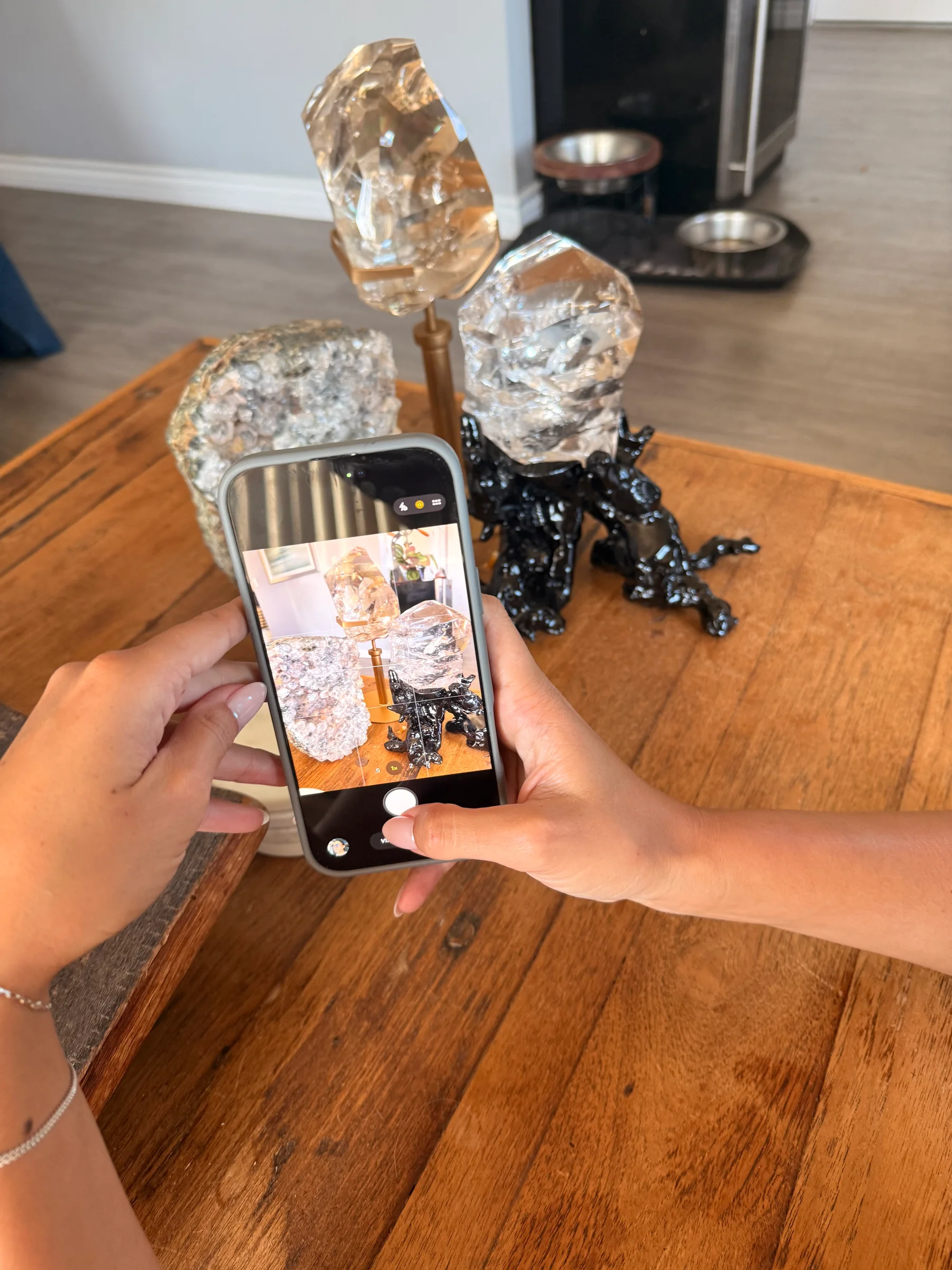
Photograph the piece as evidence, not decoration
A crystal listing replaces an in-person inspection. The strongest photos answer practical questions about color, size, condition, texture, what is included, and whether the exact item matches what the buyer wants.
Styled photos can add atmosphere after the essentials are covered. They should not replace a clear first image, scale, multiple angles, and direct photos of flaws.
The eight-photo crystal listing
01
The clear first photo
Show the entire exact piece, centered and large enough to understand at a glance. Use a simple background and leave promotional text, watermarks, prices, and logos off the image.
02
The opposite side
Turn the piece around. A buyer should not have to guess what the back, base, or unpolished side looks like.
03
A true scale photo
Place the piece beside a ruler, coin, or hand. Keep the written dimensions too, because perspective can still distort scale.
04
The base and standing position
Show whether a tower, free form, slab, or specimen sits securely. Photograph any stand separately and state whether it is included.
05
Close details
Capture crystal faces, inclusions, patterns, polish, matrix, labels, and other characteristics that make the exact piece distinct.
06
Every chip, repair, or unstable area
Use a close, sharp photo and identify the location in the description. Honest flaw photos reduce uncertainty and help the right buyer decide.
07
Color in neutral light
Take at least one photo in indirect daylight or another neutral light source. Avoid color-changing bulbs, heavy filters, and automatic enhancements that misrepresent the piece.
08
What is included
If the sale includes a chain, display stand, label, box, or several pieces, show the complete group together and describe each part.
How to handle difficult crystal surfaces
Reflective polish: move the light to the side, use a larger white surface such as a curtain to soften reflections, and angle the phone so it is not visible in the piece.
Clear quartz: use a background that provides gentle contrast around the edges. A pale gray or muted dark background may show the form more honestly than bright white.
Flashy material: one angled photo or short video can show labradorescence or another moving optical effect. Also include a neutral straight-on photo so the listing does not imply that the flash is visible from every angle.
Sparkly clusters: focus on one stable face, increase light rather than digital sharpening, and inspect the photo at full size before uploading.
Before you publish
- The first photo shows the entire exact item clearly.
- The piece fills most of the frame without being cropped.
- At least one photo shows realistic color in neutral light.
- The base, back, and sides are visible.
- A ruler, coin, or hand gives scale.
- Every known flaw or repair has a direct close photo.
- Included stands, chains, labels, or bundle pieces are shown.
- No watermark, price, promotional text, or filter covers the piece.
Choose the first photo for people and search engines
The first image appears on marketplace cards and may also become the image used in Google Shopping. Google’s product image guidance asks sellers to show the actual product clearly, avoid promotional overlays, and use the highest useful resolution available.
Keep the original file. Uploading a screenshot of a social post usually lowers quality and can add interface elements or text that do not belong in a product image.
Sources and further reading
- Product image guidelines from Google Merchant Center
- Google image SEO best practices from Google Search Central
- Adding pictures to your listings from eBay
Explore related crystal collections
Continue learning
Related crystal guides
Sellers
How to sell crystals online
A practical guide to choosing pieces, taking useful photos, writing accurate listings, pricing, packing, and sharing your shop.
Sellers
How to price your crystal collection
Compare similar pieces, separate asking prices from sold evidence, account for condition and treatments, and choose a realistic pricing plan.
Put the guide into practice
Use the marketplace to browse current pieces or prepare a collection for its next keeper.